























































































‘Stop hiring humans’? Silicon Valley confronts AI job pani

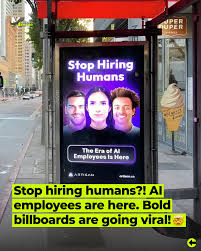
Silicon Valley is facing a growing wave of anxiety over artificial intelligence and its impact on jobs, as executives, investors, and workers grapple with a future where machines increasingly perform tasks once handled by humans. The concern came into sharp focus at recent industry gatherings such as the HumanX conference in San Francisco, where a provocative slogan — “Stop hiring humans” — captured the unease surrounding AI’s rapid adoption. While many technology leaders publicly encourage workers to “lean into their humanity” by focusing on creativity, judgment, and communication skills, they have been far less clear about how many roles could ultimately disappear.
The fears are not unfounded. Across the tech sector, companies are openly linking job cuts to AI-driven efficiencies, with high-profile examples including major firms reducing thousands of positions while claiming automation can now handle large portions of their workload. At the same time, broader industry data shows tens of thousands of layoffs in early 2026, with a significant share attributed to AI and automation, reinforcing the perception that technology is directly replacing human labor. Hiring trends are also shifting, with reports indicating a decline in new tech job openings as companies prioritize AI systems over expanding headcount.
Yet the narrative is more complicated than a simple replacement story. Some economists and industry leaders argue that companies may be overstating AI’s role in layoffs, using it as a justification for cost-cutting or correcting previous overhiring — a phenomenon critics call “AI-washing.” Even within the tech industry, there is disagreement about how quickly AI can truly replace human workers. While some executives predict that AI will transform nearly every job and fundamentally reshape how work is done, others insist that human oversight, creativity, and decision-making remain essential, especially given the current limitations of AI systems.
At the same time, the culture of work inside Silicon Valley is already changing. Companies are increasingly measuring employees by how effectively they use AI tools, integrating automation into daily workflows and even performance evaluations. This shift signals that the future may not be about replacing humans entirely, but about redefining their roles alongside AI. Still, the transition is creating deep uncertainty, particularly for entry-level workers who face fewer opportunities as automation handles routine tasks.
Ultimately, the “stop hiring humans” narrative reflects a broader tension between technological optimism and economic disruption. While AI promises massive productivity gains and new types of jobs, it is also reshaping hiring, reducing traditional roles, and forcing workers to adapt at an unprecedented pace. As companies continue to invest heavily in AI while cutting costs elsewhere, the central question remains unresolved: not whether AI will change the nature of work, but how quickly — and at what human cost.