









































































Need for law, medicine coordination highlighted at interdisciplinary dialogue in Jodhpur

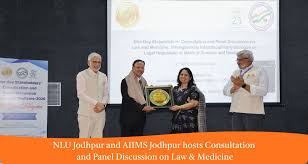
The growing need for stronger coordination between the fields of law and medicine was highlighted at an interdisciplinary dialogue held in Jodhpur, where experts from both domains emphasized that complex modern challenges require integrated approaches rather than isolated decision-making. The discussion brought together legal professionals, medical practitioners, academicians, and policymakers to examine how gaps between the two systems can affect patient care, legal outcomes, and overall public trust. Participants noted that issues such as medical negligence, consent, forensic evidence, and end-of-life decisions increasingly demand a clear understanding of both legal frameworks and medical realities.
Speakers pointed out that misunderstandings often arise when legal processes do not fully account for the nuances of medical practice, or when healthcare professionals lack awareness of legal obligations and patient rights. This disconnect can lead to prolonged litigation, inconsistent judgments, and stress for both doctors and patients. By fostering better communication and shared knowledge, experts argued, both sectors can function more effectively and deliver fairer outcomes. For instance, clearer medico-legal guidelines and improved documentation practices were identified as essential tools for reducing disputes and ensuring accountability.
The dialogue also explored the role of forensic medicine in strengthening the justice system, particularly in criminal investigations where medical evidence plays a critical role. Participants stressed the importance of proper training for doctors in handling medico-legal cases, including evidence preservation, accurate reporting, and courtroom testimony. Similarly, legal professionals were encouraged to deepen their understanding of medical procedures and terminology to better interpret expert opinions and avoid misrepresentation.
Another key area of focus was patient rights and ethical standards, with discussions highlighting the need for informed consent, confidentiality, and transparency in healthcare delivery. Experts noted that as medical technology advances, new ethical and legal questions are emerging, making interdisciplinary collaboration even more important. They also called for incorporating medico-legal education into both medical and law curricula, ensuring that future professionals are better equipped to navigate the intersection of the two fields.
The event concluded with a consensus that institutional mechanisms should be strengthened to support ongoing collaboration, including joint training programs, policy consultations, and research initiatives. Participants emphasized that such efforts are crucial not only for resolving disputes but also for preventing them, by promoting clarity, trust, and mutual understanding.
As healthcare systems and legal frameworks continue to evolve, the insights from the Jodhpur dialogue underscore the importance of bridging disciplinary divides. By aligning medical expertise with legal principles, stakeholders believe it is possible to create a more responsive and equitable system that serves both patients and society more effectively.