


























































Stalin’s remarks on paddy incentive ‘baseless, politically motivated’: Nirmala Sitharaman

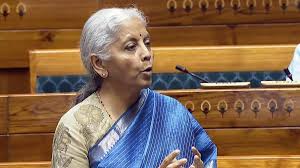
Union Finance Minister Nirmala Sitharaman has strongly rejected remarks made by Tamil Nadu Chief Minister M. K. Stalin regarding paddy incentives, calling them “factually baseless, politically motivated, and a deliberate distortion” intended to mislead farmers. The controversy arose after Stalin alleged that the Union government had asked Tamil Nadu to reconsider or discontinue its additional bonus for paddy cultivation, a claim that quickly escalated into a political confrontation. Responding to the allegation, Sitharaman clarified that no such directive had been issued by the Centre and emphasized that the communication in question was merely an advisory sent to all states, not specifically to Tamil Nadu.
According to the Finance Ministry, the January 2026 letter from the Department of Expenditure encouraged states to align their agricultural bonus policies with broader national priorities such as promoting pulses, oilseeds, and millets, which are considered important for nutritional security, reducing import dependence, and ensuring sustainable agriculture. Sitharaman stressed that the decision to provide any bonus above the Minimum Support Price (MSP) remains entirely within the jurisdiction of state governments and that the Centre has not taken away that authority. She argued that portraying the advisory as an attempt to stop paddy incentives is misleading and risks creating unnecessary anxiety among farmers.
Stalin, however, maintained that the letter explicitly suggested reviewing the existing paddy bonus policy and considering its discontinuation, especially in light of increased production. He challenged the Centre to make the communication public and defended his government’s stance on continuing financial support for paddy farmers, describing it as essential for ensuring fair income and protecting agricultural livelihoods in the state. The issue has gained political traction, particularly in the context of electoral narratives in Tamil Nadu, where farmer welfare and subsidy policies are key campaign themes.
Sitharaman, in her rebuttal, accused Stalin of creating a controversy for political gain, asserting that the Centre’s approach is aimed at long-term agricultural sustainability rather than imposing restrictions. She highlighted that excessive focus on water-intensive crops like paddy and wheat can lead to environmental stress and imbalance in crop patterns, while diversification into pulses and oilseeds could offer better economic and ecological outcomes.
The exchange reflects broader tensions between the Centre and states over agricultural policy, federal autonomy, and political messaging. While both sides claim to act in the interest of farmers, the disagreement underscores differing priorities — with the Centre advocating crop diversification and the state emphasizing continued direct incentives for paddy cultivation. As the debate continues, the issue remains significant for millions of farmers whose livelihoods depend on government support policies, and it is likely to remain a focal point in political discourse in the coming months.